About
I am passionate about building software that helps ecologists see more of nature
with less effort.
From 2016 to 2025 I worked at the Helmholtz Centre for Environmental Research (UFZ) and the
German Centre for Integrative Biodiversity Research (iDiv), first as an R programmer and then as
a data scientist, on plant–pollinator networks, statistics, software tools and R packages for
ecological analysis. Alongside this job I completed my PhD, combining computer vision, machine
learning and affordable
smartphones to monitor pollinators automatically. Since July 2026 I have continued this work at
UFZ and iDiv as a postdoc.
I am open to research and data science roles in academia and industry. The quickest way to reach
me is through LinkedIn. Email works
too (valentin.stefan at idiv.de or ufz.de), but my inbox gets a lot of spam, so LinkedIn is faster.
Current work
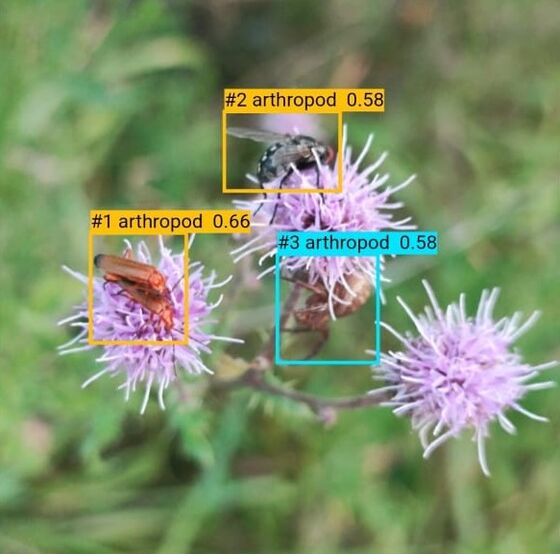
Smartphones are affordable, robust and everywhere. Why not turn them into field cameras that
record and recognise insects and other animals? Monitoring biodiversity would then no longer
need expensive equipment, technicians to assemble microcomputers, or many hours of sorting
images by hand.

An AI wildlife camera on your phone
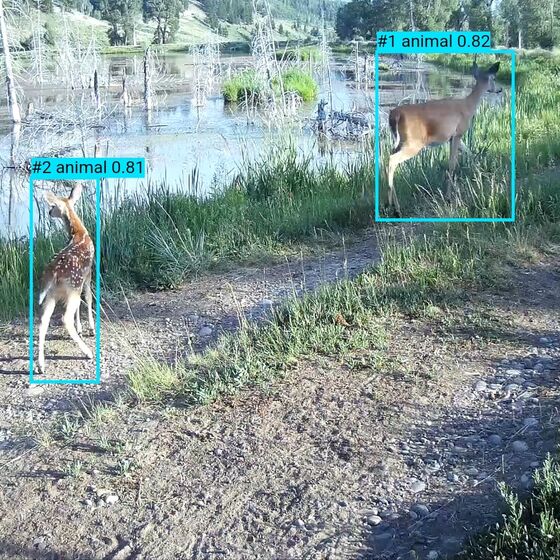
FaunaPulse turns an Android smartphone into a camera that detects, tracks and identifies animals.
- Real-time detection and tracking on the device, no cloud needed
- Add your own AI models, with Python tools to convert them
- Also possible: motion-triggered recording, time-lapse photos or scheduled videos
Get it on Google Play
Source code
AI models
· DOI
Flutter/Dart · Android · AGPL-3.0

A second life for old phones as time-lapse cameras
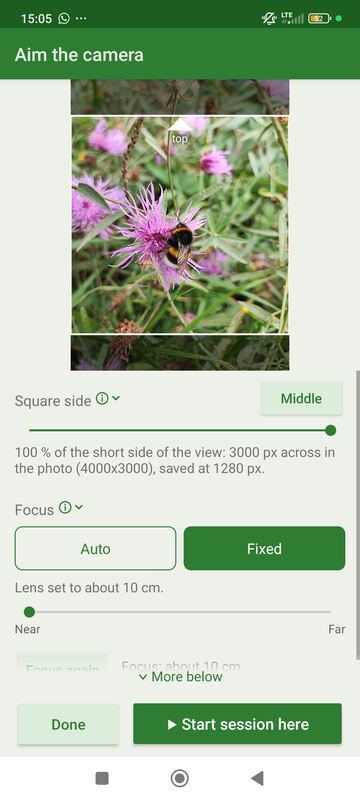
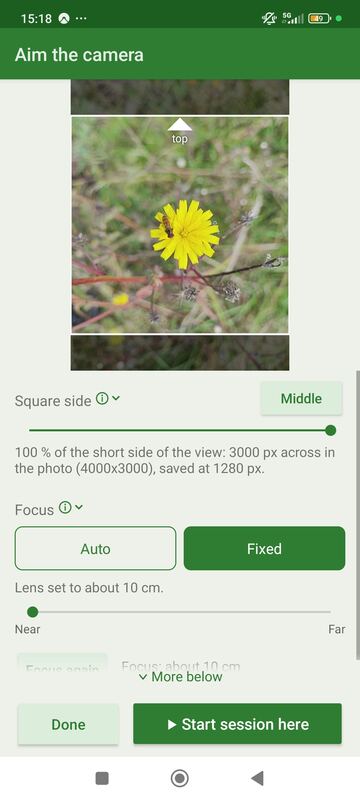
FaunaLapse, the sister app of FaunaPulse, turns old or inexpensive Android phones into
time-lapse cameras. It needs no AI, so it runs even on phones from as far back as 2017.
- Screen-off photo bursts or short video clips
- Rests the camera between bursts to save battery and keep the phone cool
- Crops to the area you choose, for smaller files
Download APK file
Source code
DOI
Java · Android · AGPL-3.0 · beta
Related
-
Code and data for our 2025 Scientific Reports paper testing pretrained YOLO
detectors on unseen time-lapse images of pollinators.
Python · paper · dataset
-
Tools to convert and quantise detection and identification models so they run on phones
inside FaunaPulse.
Python · DOI
R packages
-
Whittaker biome diagrams with ggplot2, for placing study sites in climate space.
R · code · DOI
-
Geodesic buffers around points, with radii in metres.
R · code · DOI
-
Bootstrapping indices of bipartite ecological networks, such as plant–pollinator networks.
R · code · DOI
-
Turnover saturation curves via bootstrapping, to check whether sampling captured
community turnover.
R · code · DOI
Selected publications
-
Successes and limitations of pretrained YOLO detectors applied to unseen time-lapse images for automated pollinator monitoring
Ștefan V, Stark T, Wurm M, Taubenböck H, Knight TM (2025) Scientific Reports
-
Utilising affordable smartphones and open-source time-lapse photography for pollinator image collection and annotation
Ștefan V, Workman A, Cobain JC, Rakosy D, Knight TM (2025) Journal of Pollination Ecology
-
YOLO object detection models can locate and classify broad groups of flower-visiting arthropods in images
Stark T, Ștefan V, Wurm M, Spanier R, Taubenböck H, Knight TM (2023) Scientific Reports
-
Land use and pollinator dependency drives global patterns of pollen limitation in the Anthropocene
Bennett JM, Steets JA, Burns JH, … Ștefan V, … Ashman T-L (2020) Nature Communications
The full list is on Google Scholar
and ORCID.